 | Architecture
Japanese Castles were built in a variety of environments and the most common castles were mountain castles or, 'Yamajiro'. There were also castles built on flat plains, which were called 'Hirajiro', and castles built on lowland hills, named 'Hirayamajiro'. Some isolated castles were even built on small, natural or artificial lakes, or in the sea and along the shore. Before the Castles were built the daimyo and his advisors planned the layout and took advantage of the landscape surrounding it.The designers laid out ropes to mark where all the walls, moats and gates were, this process was called 'nawabari' |
The castles had various 'design features' that made their castle strong and defensive. Some of the features included:
- Had large and tall walls for protection
- Had moats around them to discourage digging of tunnels
- Had narrow/steep stairs to make assult difficult
- Had portholes for guns and arrows
- Had a main gate area that could be used as a trap
- Had concentric of walls to give them layers of protection
- They could be built on top of hills to give them an advantageous posistion and view.
Walls of the castle
When a Japanese Castle could not be built on top of a hill or mound, often one would be created artificially. The hight of a castle not only aided its defence, but also gave the castle a greater view of surrounding land and made it look more impressive and intimidating. The hills , which were usually made of stone, gave the castle great, sloping walls. It has been argued that these helped to protect the castles from frequent earthquakes.
Within these walls, there were narrow spaces where defenders could fire at attackers and still have nearly full cover. Spaces for firing were called 'Sama', arrow slits were called 'Yasama', gun emplacements were called 'Tepposama', and later, spaces for cannons were named 'Taihosama'. Unlike European castles, the timber of the Japanese Castle's walls would be left sticking inwards and planks would be placed over them to provide a place for gunners and archers to stand on. Other tactics of defence for the walls included having:
-
Long bamboo spikes planted into the ground at a diagonal (to stop attackers climbing the walls)
-
felled trees with their branches facing outwards
-
trapdoors built into the castle's towers
-
Logs hanging suspended from ropes, ready to drop on attackers.
Japanese castles also usually featured large moats and were surrounded by big, protective walls (like a fence). These walls were only restricted to the castle compound and did not extend to the castle town.
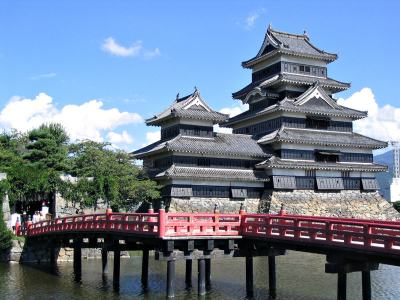
Buildings The castle keep (tower built in the most protected part of a castle), or 'Tenshukaku', was usually three to five stories tall and was linked to a number of smaller buildings that were usually two or three stories tall. The keep was usually the tallest and most elaborate part of the complex and because it was usually the largest, it housed the Daimyo and his central command post. The keep was the least military equipped of all the castle buildings, as it was protected by walls and towers. When a castle was infiltrated or invaded by enemy forces, the central keep was the last place of refuge. It served as a point from which counter-attacks and attempts to retake the castle could be made. If there was no hope of retaking the castle, certain rooms within the keep would often become the sight of the 'Seppuku' (ritual suicide) of the daimyo, his family and closest retainers.
| 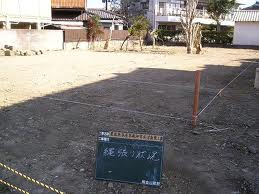 An example of Nawabari |
Palisades, or stakewalls, lined the top of the castle walls and patches of trees were planted along them. This added scenery to the Daimyo's home and helped to hide the insides of the castle compound from spies or scouts.
A variety of towers or turrets ('Yagura') were placed at the corners of walls, over gates and in other positions. These were used as watchtowers, water towers and for moon viewing.
Layout
important part of castle defence was the layout of the castle. Some castles were arranged in concentric circles, with each courtyard lying inside the last, while some castles lay their courtyards in a row. The gates, walls and courtyards were carefully arranged into a complex system to block out an invading army. Passageways would often lead to blind alleys and the layout would often prevent invaders from being able to see ahead to where different passages might lead.
Since sieges rarely involved the destruction of walls, defenders of the castle could anticipate the ways that an invading army would move through the compound. Because of this, defenders could easily drop things like rocks or hot sand on the enemy. Gates were often placed at tight corners or at right angles in a courtyard, limiting the numbers that could pass through it at one time.
